Every job below is one we do ourselves across Arlington.
We frame new decks with pressure-treated pine joists set 16 inches on center, sometimes 12 if you're going with composite decking that needs tighter support. Posts get set on concrete footings below grade, sized for the span and the load, not a one-size post for every yard. We flash the ledger board where it meets your house so water doesn't track behind the siding and rot the rim joist.
Soft spots, bouncy boards, and rails that wiggle when you lean on them usually point back to the framing, not just the surface. We pull the decking to check the joists and beam for rot before we patch anything on top, because a new board over a rotten joist just buys you another year. Most repairs we see trace back to a ledger board that was never flashed right in the first place.
Cedar and pressure-treated pine both need a fresh coat of sealant every two to three years out here, sooner if the deck sits in full sun most of the day. We pressure wash first, let the wood dry out for a couple of days, then apply a penetrating stain rather than a film-forming finish that'll just peel. Skip it long enough and the UV breaks down the wood fibers, and you end up with gray, splintery boards that need replacing instead of refinishing.
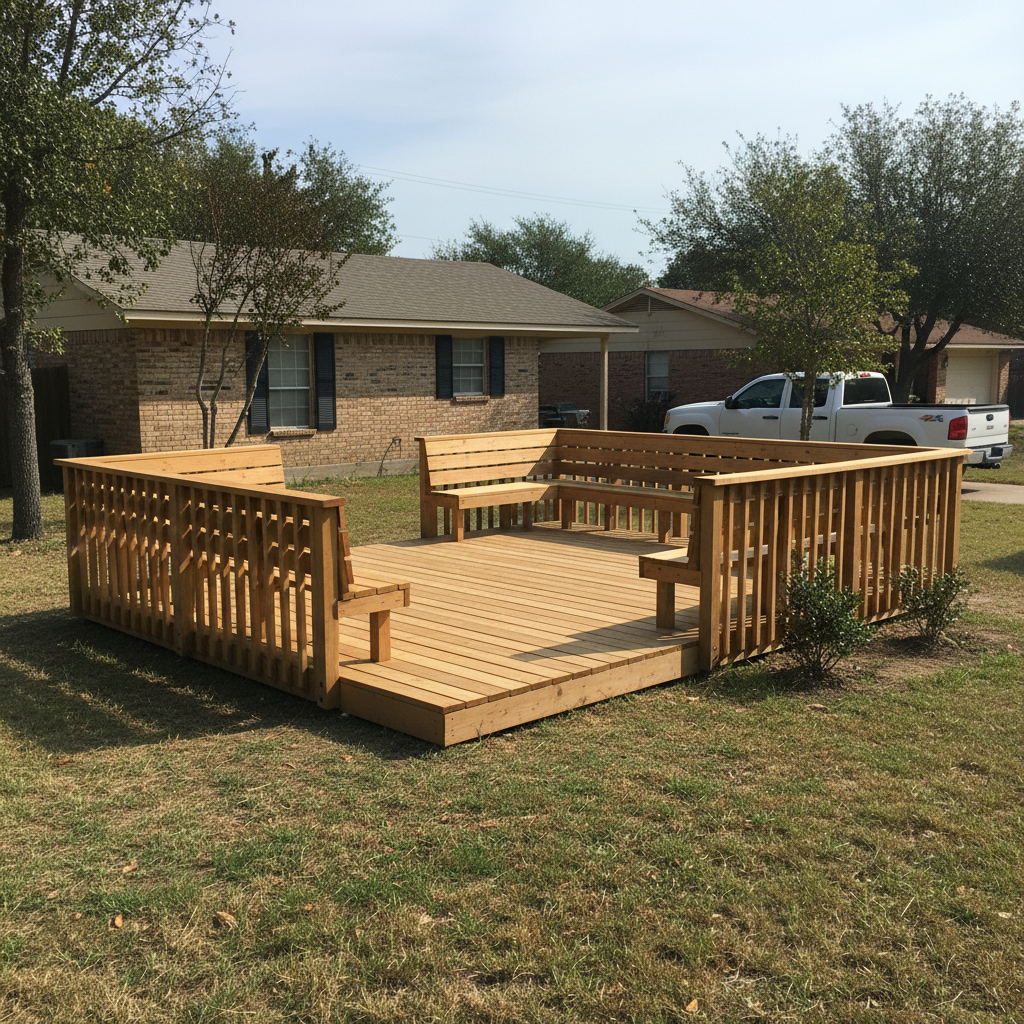
We walk your yard before we draw anything, because the slope and the drainage decide more about the layout than the picture in your head does. Multi-level decks, built-in benches, and shade structures all get drawn to scale so you know the footprint before we order a single board.
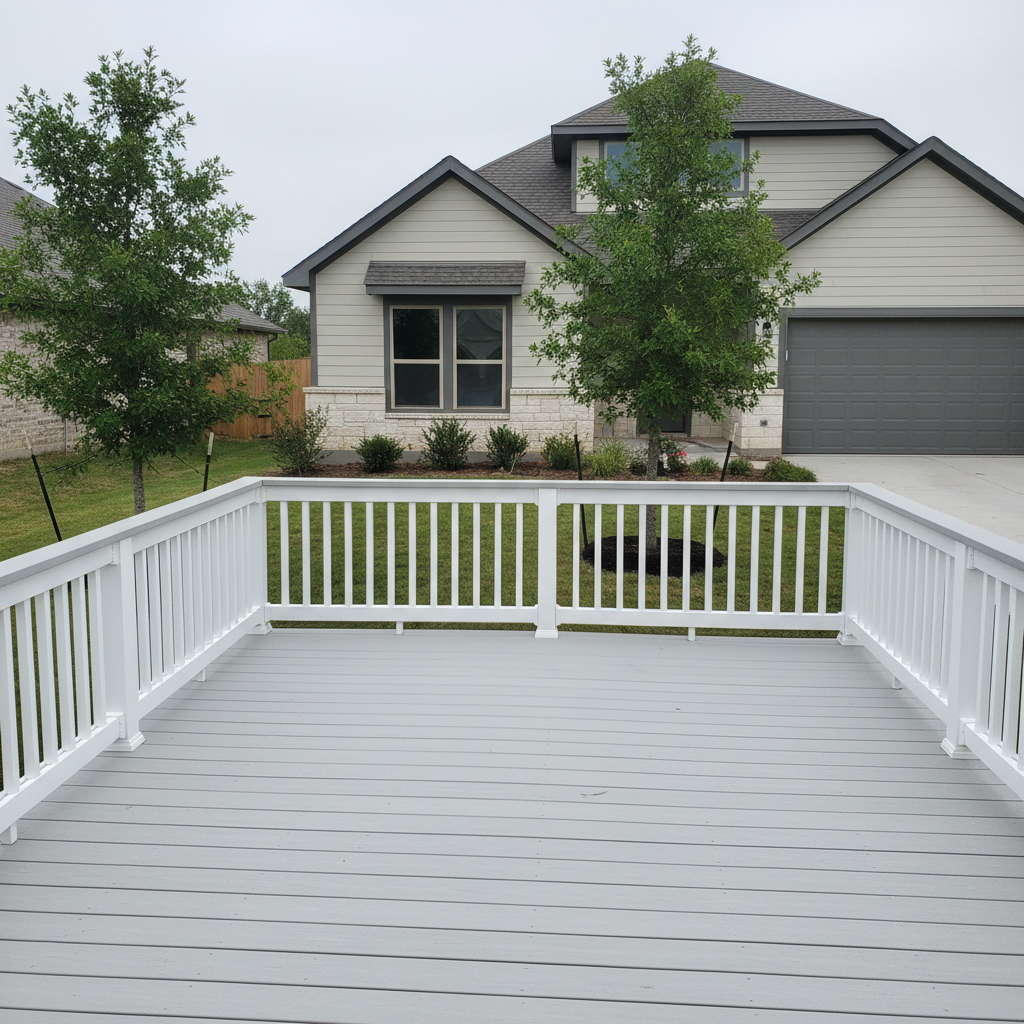
Composite boards like Trex or TimberTech don't rot or splinter, but they expand and contract more than wood does with the heat swings here. We leave the manufacturer's gap spacing between boards and use hidden fastener clips instead of face screws, so the deck looks cleaner and the boards aren't fighting the hardware in August.
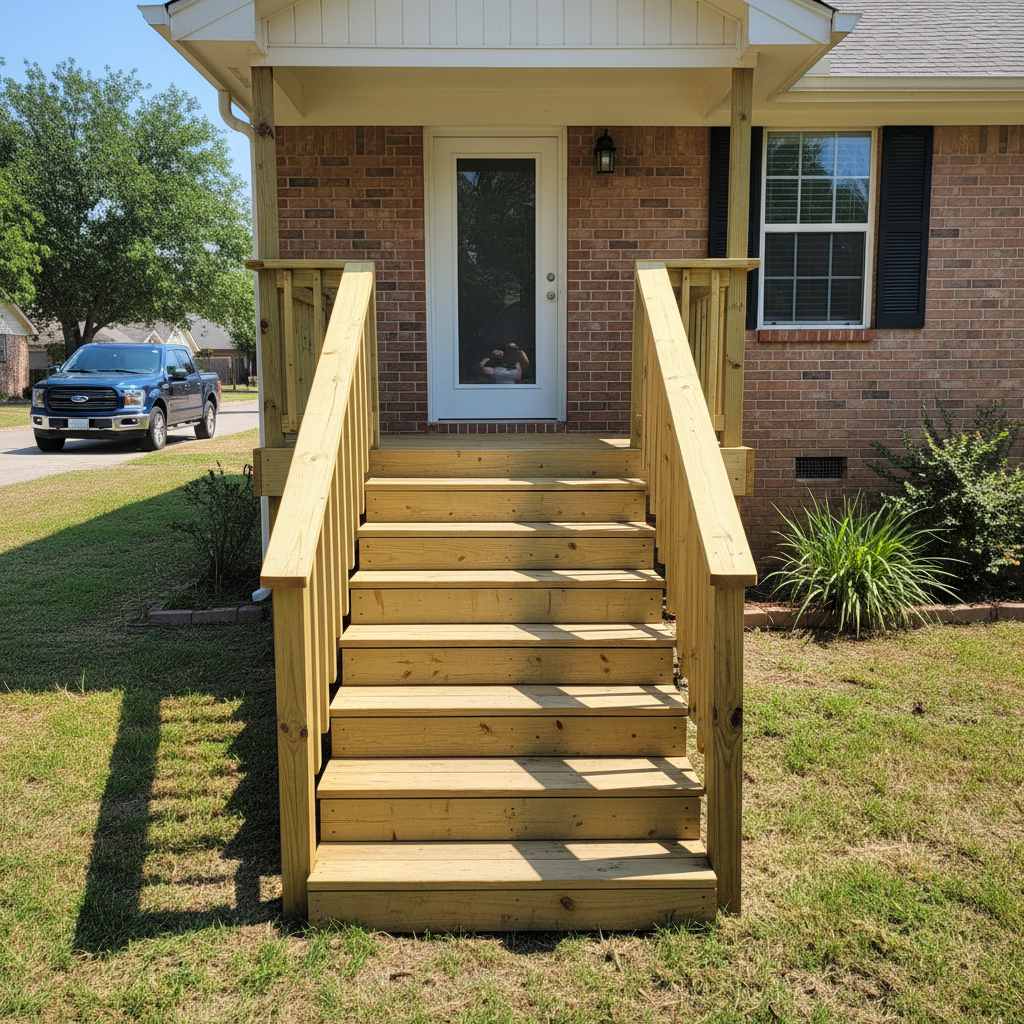
Baluster spacing has to pass a 4-inch sphere test under residential code, and stair stringers need consistent rise and run or someone's going to catch a toe. We build rail posts bolted through the rim joist, not just screwed to the face board, because that's the part that takes the load when someone leans on it.
If the frame underneath is still solid, we'll pull the old decking and lay new boards without rebuilding the whole structure. It's a faster, cheaper way to get rid of cupped or splintering boards when the joists and posts have years left in them.
A pergola or a solid cover cuts down the afternoon sun on a deck that otherwise gets too hot to sit on by June. We tie the posts into the existing deck framing or set new footings alongside it, depending on what the current structure can carry.
Old decks get torn down board by board, and we check the ledger and rim joist on the house itself for rot while it's exposed. Material gets hauled off the same day, not left stacked in the yard.
Elevated decks and multi-level builds carry more load per post and need engineered beam spans, not rule-of-thumb lumber sizing. We size footings for the actual height and span involved, and get the permit and inspection sign-off before you ever put a chair on it.
Four steps, and no surprises in any of them.
You tell us what you want doing, we look at what is actually there, and we ask the awkward questions early.
In writing, itemised, free. If something might add cost later we flag it now rather than at the end.
Same crew throughout. We cover your floors, keep the dust down and tidy up before we leave each day.
You point out anything you are not happy with and we fix it before the invoice, not after.
These services are available throughout our Arlington-area service radius.
Once a project's underway, these come up next.
Describe the problem and we will tell you what it probably is. No obligation.